


Blast Disease in Rice: Prevention & Control

A Complete Guide for Farmers
By Team – Omkar Seeds
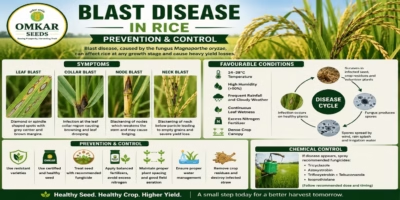
Rice blast is one of the most destructive fungal diseases affecting rice cultivation worldwide. Under favourable weather conditions it can cause severe yield losses by damaging leaves nodes collars and panicles. The disease is particularly harmful during humid weather and can spread rapidly if not managed in time.
A combination of resistant varieties quality seed balanced fertilization and timely fungicide application can effectively minimize losses. This article explains the symptoms causes favourable conditions and management practices for rice blast disease.
What Causes Blast Disease?
Blast disease is caused by the fungus Magnaporthe oryzae formerly known as Pyricularia oryzae.
The pathogen survives on infected crop residues volunteer rice plants and infected seeds. Under suitable environmental conditions fungal spores spread through wind and rain and infect healthy rice plants.
Economic Importance of Rice Blast Disease
Rice blast can infect the crop at almost every growth stage and may cause 10–30% yield loss under normal conditions. Severe epidemics can result in losses exceeding 50%, particularly when panicle blast occurs.
The disease can therefore have a significant impact on rice production when favourable conditions allow it to spread rapidly.
Symptoms of Blast Disease in Rice
Rice blast can appear on different parts of the plant. The symptoms vary depending on whether the infection occurs on leaves collars nodes or panicles.
Leaf Blast
Leaf blast is the earliest and most common symptom of the disease.
Typical symptoms include:
- Diamond-shaped or spindle-shaped lesions
- Grey or whitish centre
- Dark brown margins
- Lesions that enlarge and merge under severe infection
- Premature drying of leaves
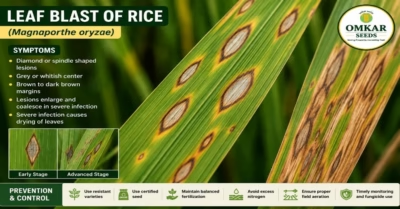
Early identification of leaf symptoms can help farmers take timely disease management measures.
Collar Blast
Collar blast occurs at the collar region where the leaf blade joins the leaf sheath.
Symptoms include:
- Brown or black discoloration
- Leaf drooping
- Premature drying of leaves
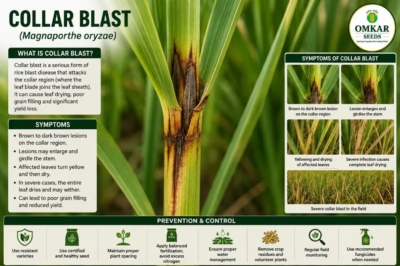
Regular field monitoring can help farmers identify collar infection before it spreads further.
Node Blast
Node blast occurs when the fungus infects the nodes of the rice stem.
Symptoms include:
- Stem turning black
- Weak stem
- Lodging may occur
- Poor nutrient movement
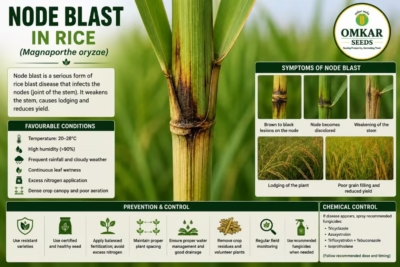
Severe node infection can weaken the plant and may contribute to lodging.
Neck or Panicle Blast
Neck blast is considered the most damaging stage of rice blast disease.
Symptoms include:
- The neck below the panicle becomes black or brown
- Panicles remain partially or completely empty
- Poor grain filling
- Significant yield reduction
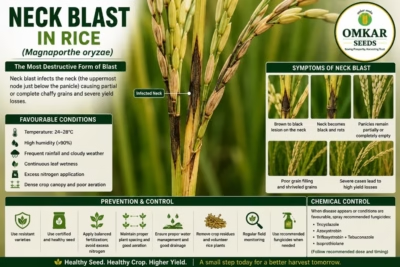
Panicle infection can directly affect grain formation and therefore cause major yield losses.
Disease Cycle of Rice Blast
The fungus can survive in:
- Infected seed
- Crop residues
- Volunteer rice plants
- Wild grasses
Spores produced on infected plants can spread through:
- Wind
- Rain splash
- Irrigation water
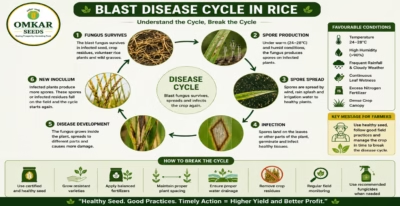
Repeated infection cycles can occur during humid weather. This makes regular field monitoring especially important during periods that favour disease development.
Favourable Conditions for Blast Disease
Blast disease can develop rapidly under the following conditions:
- Temperature: 24–28°C
- Relative humidity: Above 90%
- Frequent rainfall
- Cloudy weather
- Continuous leaf wetness
- Excess nitrogen fertilizer
- Dense crop canopy
- Poor field aeration
Understanding these conditions can help farmers monitor their fields more carefully during disease-prone periods.
Integrated Disease Management
Managing rice blast effectively requires a combination of preventive and control measures.
Use Resistant Varieties
Growing blast-resistant varieties is one of the most economical and sustainable methods of disease control.
Farmers should select varieties recommended by their local agricultural university or state agriculture department.
Use Certified Seed
Always purchase certified seed from reliable seed companies.
Certified seed can provide:
- Better germination
- Higher vigour
- Lower risk of seed-borne infection
- Improved crop establishment
Healthy crops begin with quality seed. Starting with good quality seed can provide a stronger foundation for crop establishment.
Seed Treatment
Treat seed before sowing with a recommended fungicide according to local agricultural recommendations.
Seed treatment helps reduce primary infection and promotes healthy seedling establishment.
Always follow the recommended treatment and application instructions for the particular crop and product.
Balanced Fertilizer Application
Avoid excessive nitrogen application.
Instead:
- Apply recommended nitrogen doses
- Split nitrogen application
- Ensure adequate potassium nutrition which improves plant tolerance
Balanced nutrition can help reduce disease severity and support healthier crop development.
Proper Plant Spacing
Avoid overcrowding in the field.
Proper spacing:
- Improves air circulation
- Reduces humidity inside the crop canopy
- Limits disease spread
A well-managed crop canopy can help create less favourable conditions for disease development.
Water Management
Maintain proper field drainage whenever possible.
Avoid unnecessary water stress and prolonged stagnant water during disease-prone periods.
Proper water management should be combined with other disease management practices for better crop protection.
Remove Crop Residues
After harvest:
- Destroy infected straw
- Remove volunteer rice plants
- Maintain field sanitation
These practices help reduce the carryover of fungal inoculum into the next crop.
Chemical Control
When disease appears under favourable weather conditions timely fungicide application can effectively reduce disease spread.
Common fungicides recommended for blast management include:
- Tricyclazole
- Azoxystrobin
- Trifloxystrobin + Tebuconazole
- Isoprothiolane
- Carbendazim
Important: Always use fungicides only according to the recommendations on the product label and the advice of your local agricultural extension service, including the correct dose timing and number of sprays.
Overuse or incorrect use can promote fungicide resistance and increase production costs.
Integrated Blast Management Schedule
| Crop Stage | Recommended Practice |
|---|---|
| Before sowing | Use certified seed and treat seed if recommended |
| Nursery stage | Monitor seedlings regularly |
| Transplanting | Maintain proper spacing |
| Vegetative stage | Apply balanced fertilizers |
| Disease appearance | Follow local recommendations for fungicide application if needed |
| Harvest | Remove infected crop residues |
Tips to Reduce Blast Disease
Farmers can follow these practices to help reduce the risk and severity of rice blast:
- Use certified disease-free seed
- Choose resistant varieties suitable for your region
- Avoid excessive nitrogen application
- Maintain proper field sanitation
- Monitor fields regularly especially during humid weather
- Ensure balanced crop nutrition
- Follow integrated disease management practices
Why Quality Seed Matters
Healthy crops begin with healthy seed.
Using certified seed offers several advantages:
- Better germination
- Strong seedling vigour
- Uniform crop establishment
- Reduced disease risk
- Higher yield potential
Combining quality seed with good agronomic practices forms the foundation of successful disease management.
Conclusion
Blast disease remains one of the most serious threats to rice production. However it can be managed through an integrated approach.
Selecting resistant varieties using certified seed maintaining balanced nutrition monitoring the crop regularly and applying fungicides responsibly when necessary can help reduce disease incidence and protect yield.
At Omkar Seeds, we believe that successful crop protection begins with quality seed. By combining high-quality certified seed with scientific crop management practices farmers can produce healthier crops achieve better yields and improve profitability.
Choosing quality seed is the first step toward a healthier and more productive rice crop.
References
- Indian Council of Agricultural Research (ICAR). Handbook of Agriculture. ICAR New Delhi.
- ICAR–Indian Institute of Rice Research (IIRR) Hyderabad. Rice Production Manual.
- International Rice Research Institute (IRRI). Rice Knowledge Bank – Blast Disease.
- Food and Agriculture Organization (FAO). Rice Production Guidelines.
- Punjab Agricultural University (PAU) Ludhiana. Package of Practices for Kharif Crops.
- CCS Haryana Agricultural University (CCS HAU) Hisar. Package of Practices for Kharif Crops.
- Directorate of Plant Protection Quarantine & Storage Government of India.
- CABI Crop Protection Compendium. Rice Blast Disease (Magnaporthe oryzae).

