


Pusa Basmati 1847, 1885 and 1886: Features, Yield and Disease Resistance

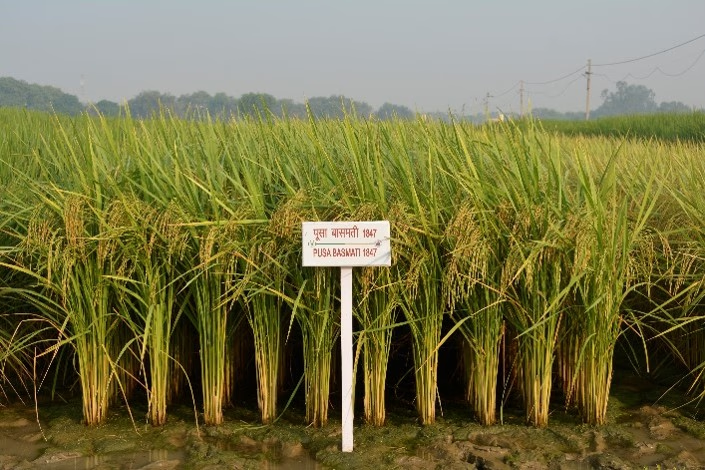
Pusa Basmati 1847, 1885 and 1886: Features, Yield and Disease Resistance
By Team Omkar Seeds
Basmati rice is valued for its long slender grains strong aroma and excellent cooking quality. With the development of improved varieties farmers can also benefit from important characteristics such as disease resistance good yield plant type and suitable maturity duration.
Among these improved varieties Pusa Basmati 1847, Pusa Basmati 1885 and Pusa Basmati 1886 have specific characteristics related to yield grain quality maturity and resistance to bacterial blight and blast diseases.
In this guide we look at the important features of these three Basmati rice varieties and their recommended growing areas.
Pusa Basmati 1847
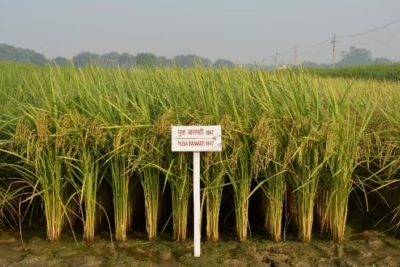
Pusa Basmati 1847 is a MAS derived near isogenic line (NIL) of the popular short duration Basmati rice variety Pusa Basmati 1509.
The variety possesses two genes for bacterial blight resistance namely xa13 and Xa21. It also possesses two genes for blast resistance namely Pi54 and Pi2.
Key Features of Pusa Basmati 1847
| Particular | Details |
|---|---|
| Yield | 5.7 t/ha |
| Plant Height | 110 cm |
| Nursery Days | 21 days after sowing |
| Sowing Date | June 15 to June 30 |
| Maturity Date | October 15 to October 30 |
| Harvest Time and Duration | October second week; 120 days duration |
| Disease Resistance | Resistance to both bacterial blight and blast diseases |
| Recommended Area | Basmati GI growing regions of Delhi Punjab and Western Uttar Pradesh |
Pusa Basmati 1847 is a semi-dwarf non-lodging and non-shattering high yielding Basmati variety with seed to seed maturity of around 120 days.
The variety has inbuilt resistance to both bacterial blight and blast diseases.
Its grains are extra-long and slender with a grain length of 8.51 mm. The variety has excellent kernel elongation on cooking with a cooked kernel length of 16.69 mm.
It has intermediate amylose content of 22.88% along with strong aroma and very occasional grain chalkiness.
The cooked rice has a flaky appearance and tenderness on touching and chewing. It also has desirable taste and optimum aroma.
Benefit and Utility
One of the important benefits of Pusa Basmati 1847 is its resistance to bacterial blight and blast diseases. According to the provided source this can avoid the use of antibiotics and fungicides in the management of these two major diseases.
Pusa Basmati 1885
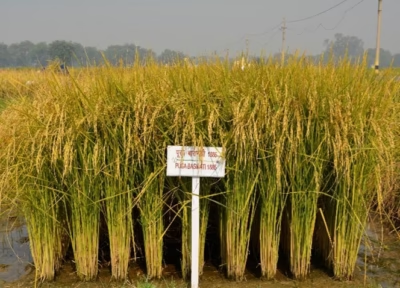
Pusa Basmati 1885 is a MAS derived Basmati near isogenic line (NIL) of the popular Basmati rice variety Pusa Basmati 1121.
It possesses two genes for bacterial blight resistance namely xa13 and Xa21 and two genes for blast resistance namely Pi54 and Pi2.
Key Features of Pusa Basmati 1885
| Particular | Details |
|---|---|
| Yield | 4.68 t/ha |
| Plant Height | 120 cm |
| Nursery Days | 21 days after sowing |
| Sowing Date | June 1 to June 15 |
| Maturity Date | October 20 to November 5 |
| Harvest Time and Duration | October third week; 140 days |
| Disease Resistance | Resistance to both bacterial blight and blast diseases |
| Recommended Area | Basmati GI growing regions of Delhi Punjab and Haryana |
Pusa Basmati 1885 is a semi-dwarf non-lodging high yielding Basmati rice variety with seed to seed maturity of around 140 days.
The variety has inbuilt resistance to both bacterial blight and blast diseases.
The grains are extra-long and slender with a grain length of 7.95 mm. They have excellent kernel elongation on cooking with a cooked kernel length of 16.52 mm.
The variety has intermediate amylose content of 21.76%. The grains have strong aroma and very occasional grain chalkiness.
Cooked rice has a flaky appearance along with tenderness on touching and chewing. It also has desirable taste and optimum aroma.
Benefit and Utility
The resistance to bacterial blight and blast diseases can help avoid the use of antibiotics and fungicides in the management of these two major diseases.
Pusa Basmati 1886
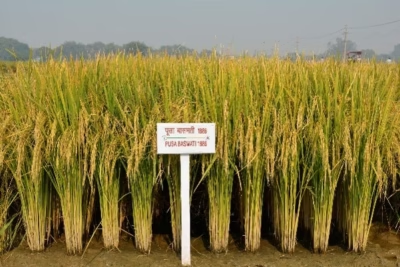
Pusa Basmati 1886 is a MAS derived near isogenic line (NIL) of the popular Basmati rice variety Pusa Basmati 6.
The variety possesses two genes for bacterial blight resistance namely xa13 and Xa21 and two genes for blast resistance namely Pi54 and Pi2.
Key Features of Pusa Basmati 1886
| Particular | Details |
|---|---|
| Yield | 4.49 t/ha |
| Plant Height | 95 cm |
| Nursery Days | 21 days after sowing |
| Sowing Date | June 1 to June 15 |
| Maturity Date | October 20 to November 5 |
| Harvest Time and Duration | October third week; 143 days |
| Disease Resistance | Resistance to bacterial blight and blast diseases |
| Recommended Area | Basmati GI growing regions of Haryana and Uttarakhand |
Pusa Basmati 1886 is a semi-dwarf non-lodging and non-shattering Basmati variety with seed to seed maturity of around 143 days.
It possesses inbuilt resistance to both bacterial blight and blast diseases.
The grains are extra-long and slender with a grain length of 7.77 mm. The variety has excellent kernel elongation on cooking with a cooked kernel length of 15.21 mm.
It has intermediate amylose content of 23.71%, strong aroma and no grain chalkiness.
Cooked rice has a flaky appearance with tenderness on touching and chewing. It also has desirable taste and optimum aroma.
Benefit and Utility
The resistance to bacterial blight and blast diseases can help avoid the use of antibiotics and fungicides in the management of these two major diseases.
Pusa Basmati 1847 vs 1885 vs 1886
| Feature | Pusa Basmati 1847 | Pusa Basmati 1885 | Pusa Basmati 1886 |
|---|---|---|---|
| Parent Variety | Pusa Basmati 1509 | Pusa Basmati 1121 | Pusa Basmati 6 |
| Yield | 5.7 t/ha | 4.68 t/ha | 4.49 t/ha |
| Plant Height | 110 cm | 120 cm | 95 cm |
| Nursery Days | 21 days | 21 days | 21 days |
| Sowing Date | June 15 to June 30 | June 1 to June 15 | June 1 to June 15 |
| Maturity Date | October 15 to October 30 | October 20 to November 5 | October 20 to November 5 |
| Duration | 120 days | 140 days | 143 days |
| Grain Length | 8.51 mm | 7.95 mm | 7.77 mm |
| Cooked Kernel Length | 16.69 mm | 16.52 mm | 15.21 mm |
| Disease Resistance | Bacterial blight and blast | Bacterial blight and blast | Bacterial blight and blast |
| Recommended Area | Delhi Punjab and Western Uttar Pradesh | Delhi Punjab and Haryana | Haryana and Uttarakhand |
Disease Resistance in Pusa Basmati Varieties
Pusa Basmati 1847 Pusa Basmati 1885 and Pusa Basmati 1886 all possess resistance to bacterial blight and blast diseases.
The varieties possess:
- xa13 and Xa21 for bacterial blight resistance
- Pi54 and Pi2 for blast resistance
Disease resistance is an important characteristic because bacterial blight and blast can affect rice crops and influence crop performance.
According to the provided information these varieties can help avoid the use of antibiotics and fungicides for management of these two major diseases.
Grain Quality and Cooking Characteristics
Grain quality is an important characteristic of Basmati rice.
The three varieties produce extra-long slender grains and show good kernel elongation after cooking.
Pusa Basmati 1847
Grain length: 8.51 mm
Cooked kernel length: 16.69 mm
Amylose content: 22.88%
Aroma: Strong
Grain chalkiness: Very occasional
Pusa Basmati 1885
Grain length: 7.95 mm
Cooked kernel length: 16.52 mm
Amylose content: 21.76%
Aroma: Strong
Grain chalkiness: Very occasional
Pusa Basmati 1886
Grain length: 7.77 mm
Cooked kernel length: 15.21 mm
Amylose content: 23.71%
Aroma: Strong
Grain chalkiness: None
The provided source describes the cooked rice from all three varieties as having flaky appearance tenderness on touching and chewing desirable taste and optimum aroma.
Recommended Growing Areas
The recommended area differs between these varieties.
Pusa Basmati 1847
Basmati GI growing regions of Delhi Punjab and Western Uttar Pradesh of India.
Pusa Basmati 1885
Basmati GI growing regions of Delhi Punjab and Haryana of India.
Pusa Basmati 1886
Basmati GI growing regions of Haryana and Uttarakhand of India.
Farmers should consider the recommended growing region along with local agricultural recommendations when selecting a variety.
Licensing and Seed Production Information
The provided source includes licensing information for PB 1847 PB 1885 and PB 1886.
| Particulars | Details |
|---|---|
| License Fee | Rs. 1,00,000 per variety |
| Quantity | 8 kg |
| Royalty at Source | Rs. 18,000/kg of breeder seed per variety |
| Royalty Amount | Rs. 1,44,000 |
| Amount Before GST | Rs. 2,44,000 |
| GST @ 18% | Rs. 43,920 |
| Total | Rs. 2,87,920 per variety |
The source states that the licensee must pay royalty of Rs. 18,000/kg of breeder seed for PB 1847 plus applicable tax at the ZTM & BPD Unit IARI at every liftment of breeder seed.
It also states that the basic cost of the seed for PB 1847 will be paid by the licensee every year at the time of liftment of breeder seed to the Seed Production Unit.
Conclusion
Pusa Basmati 1847 Pusa Basmati 1885 and Pusa Basmati 1886 are improved Basmati rice varieties with specific characteristics related to yield plant type maturity grain quality and disease resistance.
Pusa Basmati 1847 has a yield of 5.7 t/ha and a 120-day duration. Pusa Basmati 1885 has a yield of 4.68 t/ha with a 140-day duration while Pusa Basmati 1886 has a yield of 4.49 t/ha with a 143-day duration.
All three varieties possess resistance to bacterial blight and blast diseases and produce extra-long slender aromatic grains with good cooking characteristics.
Farmers should select varieties according to their recommended growing region sowing window maturity duration and local agricultural recommendations.
[Final Image: Omkar Seeds branding with Basmati rice grains and healthy paddy field]
At Omkar Seeds, we believe that quality seed is the foundation of a successful crop. Choosing the right variety can help farmers work toward better crop establishment grain quality and productive farming.

