


Why Certified Seed Gives Higher Yield Than Farm-Saved Seed

A Complete Guide for Farmers
By Team Omkar Seeds
Seed is the foundation of every successful crop. No matter how well farmers manage irrigation fertilizers or crop protection the final yield largely depends on the quality of the seed sown.
Many farmers save seeds from their previous harvest for the next season. This can reduce the initial cost of seed. However repeated use without proper selection and storage can affect seed quality over time.
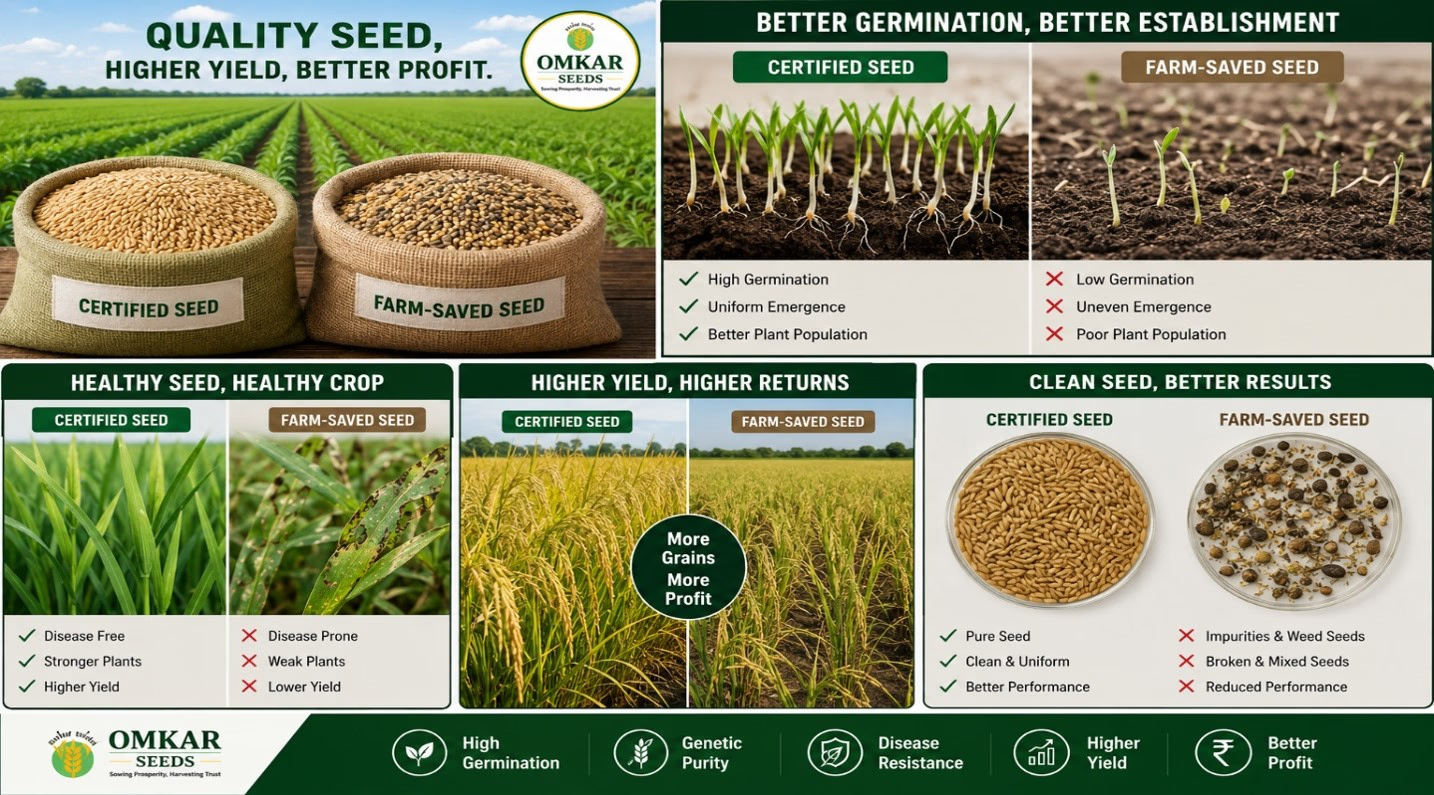
Certified seeds are produced under strict quality standards and undergo scientific testing before reaching farmers. They offer high germination better genetic purity improved seed vigour and better crop uniformity. Farm-saved seeds on the other hand can lose vigour over time and may have a higher risk of diseases weed seeds and impurities.
Understanding the difference between certified seed and farm-saved seed can help farmers make informed choices for better crop establishment and productivity.
What Are Certified Seeds?
Certified seeds are produced through a regulated seed production system under the supervision of authorized seed certification agencies. These seeds are inspected during production processed through seed processing facilities and tested before being made available to farmers.
Certified seeds are evaluated for:
- Genetic purity
- Physical purity
- Germination percentage
- Moisture content
- Seed vigour
- Seed health
- Freedom from weed seeds
Every certified seed bag carries an official certification tag. This provides information about the seed and indicates that it has gone through the prescribed quality assurance process.
What Are Farm-Saved Seeds?
Farm-saved seeds are seeds retained by farmers from their own harvest for sowing in the following season. Saving seed is a traditional farming practice and can reduce the initial cost of purchasing new seed.
However repeated use without proper selection testing and storage can result in declining seed quality.
Over time farm-saved seeds may suffer from:
- Reduced germination
- Genetic deterioration
- Seed-borne diseases
- Weed seed contamination
- Lower seed vigour
These issues can contribute to uneven crop establishment and reduced crop performance.
Certified Seed vs Farm-Saved Seed
| Parameter | Certified Seed | Farm-Saved Seed |
|---|---|---|
| Genetic Purity | High | Can decline over time |
| Germination | Laboratory tested | Variable |
| Seed Vigour | High | Often reduced |
| Disease Incidence | Lower risk | Higher risk |
| Crop Uniformity | Excellent | Uneven |
| Yield Potential | High | Moderate to low |
| Weed Seed Contamination | Very low | Possible |
| Quality Assurance | Certified | Not tested |
Why Does Certified Seed Produce Higher Yields?
The quality of seed has an important role in crop establishment and overall crop performance. Certified seed provides several quality advantages that can support better crop growth when recommended cultivation practices are followed.
Higher Germination Percentage
Certified seeds are tested for germination before marketing. Better germination can support:
- Uniform crop establishment
- Optimum plant population
- Reduced seed wastage
- Better utilization of field space
A well-established crop provides a good foundation for achieving higher productivity.
Superior Genetic Purity
Certified seed maintains the genetic characteristics of the variety.
This can help provide:
- Uniform plant height
- Simultaneous flowering
- Uniform maturity
- Better grain quality
- Stable performance under recommended conditions
Farm-saved seed can become mixed with other varieties over time. This may reduce crop uniformity and affect overall crop performance.
Higher Seed Vigour
Seed vigour refers to the ability of a seed to germinate rapidly and produce healthy seedlings.
High-vigour seeds can:
- Establish quickly
- Develop stronger roots
- Compete effectively with weeds
- Tolerate environmental stress better
Healthy early growth gives the crop a stronger start and can support better development throughout the growing season.
Lower Incidence of Seed-Borne Diseases
Certified seed production includes field inspections and quality testing. This helps reduce the risk of seed-borne pathogens being carried with the seed.
Seed-borne diseases mentioned in the source include:
- Loose smut in wheat
- Bacterial leaf blight in rice
- Downy mildew in maize
Lower disease pressure can support healthier crops and may help reduce expenditure on plant protection.
Better Crop Uniformity
Uniform crops make farm management easier.
Benefits include:
- Efficient fertilizer application
- Uniform irrigation
- Easier weed management
- Better harvesting efficiency
- Improved grain quality
Uniform crop maturity can also help minimize harvest losses.
Reduced Weed Seed Contamination
Certified seeds are thoroughly cleaned during processing. This helps minimize the presence of unwanted material in the seed lot.
This includes:
- Weed seeds
- Broken seeds
- Inert material
- Other crop seeds
A cleaner seed lot allows the crop to utilize available nutrients water and sunlight more efficiently.
Better Response to Improved Crop Management
Certified varieties are developed through scientific breeding programmes and are intended to perform well when recommended agronomic practices are followed.
Farmers using certified seeds can obtain better results from practices such as:
- Balanced fertilization
- Irrigation management
- Integrated pest management
- Modern cultivation practices
Good seed quality combined with proper crop management can help farmers achieve better crop performance.
Economic Benefits of Certified Seeds
[Image: Farmer with harvested crop or bags of harvested grain]
Certified seeds may have a higher purchase cost than farm-saved seeds. However quality seed can provide economic benefits through improved crop establishment and productivity.
Potential benefits include:
- Higher yield
- Better marketable produce
- Reduced re-sowing
- Lower disease management costs
- Improved grain quality
The additional investment in quality seed can potentially be recovered through improved returns at harvest.
Common Problems with Farm-Saved Seeds
Repeated use of farm-saved seed can result in:
- Low germination
- Poor seed vigour
- Uneven crop stand
- Higher disease incidence
- Weed infestation
- Reduced grain quality
- Lower market value
- Declining yield over successive seasons
Improper storage can further increase the risk of insect damage and fungal infection.
[Image: Uneven crop growth showing differences in plant development]
How to Identify Genuine Certified Seed
Farmers should carefully check the information provided on the seed package before purchasing.
Important details to check include:
- Official certification tag
- Proper seed label
- Variety name
- Lot number
- Germination percentage
- Date of testing
- Validity period
- Packaging condition
Purchasing seeds from authorized dealers and reputable seed companies can help farmers ensure the quality and authenticity of the seed they purchase.
Tips for Maximizing Seed Performance
To obtain the best results from certified seeds farmers should follow recommended cultivation practices.
Purchase the Right Seed
Purchase seed suitable for your agro-climatic region and the crop you intend to grow.
Store Seed Properly
Keep seed in a cool and dry place to help maintain its quality.
Follow Recommended Sowing Time
Sowing at the recommended time can help the crop establish under suitable conditions.
Treat Seed Before Sowing
Treat seed before sowing when treatment is advised for the particular crop or variety.
Use Balanced Fertilizers
Use fertilizers according to crop requirements and soil testing recommendations.
Maintain Proper Plant Spacing
Proper spacing helps maintain an appropriate plant population and supports uniform crop growth.
Follow Integrated Pest and Disease Management
Adopt suitable pest and disease management practices throughout the growing season.
Certified Seed Is an Investment in Crop Quality
Quality seed is one of the most important inputs in agriculture. Farm-saved seed may appear economical because it reduces the immediate cost of purchasing seed. However repeated use without proper selection and storage can result in reduced germination poor seed vigour uneven crop growth and lower productivity.
Certified seed provides important quality characteristics including genetic purity tested germination seed vigour and quality assurance. These characteristics can support better crop establishment and yield potential when combined with recommended agronomic practices.
For farmers the choice of seed is an important decision at the beginning of every crop season. Starting with quality seed can provide a stronger foundation for the crop and its final harvest.
Conclusion
Certified seed and farm-saved seed differ in their quality assurance genetic purity germination seed vigour and overall consistency.
Certified seed is produced and tested through a regulated quality system. Farm-saved seed can be useful when properly selected and stored but repeated use without quality management can lead to problems such as reduced germination disease contamination and uneven crop performance.
Choosing quality seed along with proper sowing irrigation fertilization and crop protection practices can help farmers work toward better productivity and improved farm returns.
At Omkar Seeds, we are committed to supplying high-quality certified seeds that help farmers achieve stronger crop establishment higher yields and better returns. Choosing the right seed today is the first step toward a successful harvest tomorrow.
References
- Indian Council of Agricultural Research (ICAR). Handbook of Agriculture. ICAR New Delhi.
- ICAR–Indian Agricultural Research Institute (IARI) New Delhi. Seed Production and Seed Technology publications.
- Department of Agriculture & Farmers Welfare Government of India. The Seeds Act 1966 and Seeds Rules 1968.
- National Seed Corporation (NSC). Seed Production Manual.
- Punjab Agricultural University (PAU) Ludhiana. Package of Practices for Crops.
- CCS Haryana Agricultural University (CCS HAU) Hisar. Seed Production Manual.
- Food and Agriculture Organization (FAO). Quality Declared Seed System (QDS) Guidelines.
- International Seed Testing Association (ISTA). International Rules for Seed Testing.

